| Got the Power |
|
|
|
| Written by Charles Horton |
|
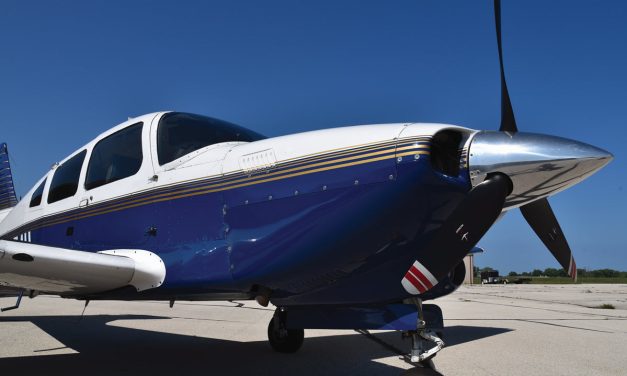
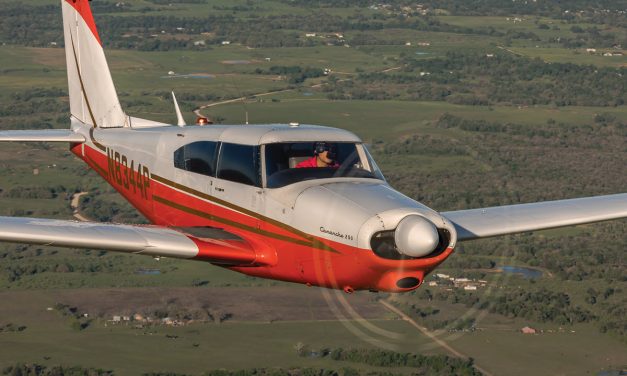
I fly the finest, single-engine airplane that Piper ever built. Perhaps I should say “that Piper and I built’’ because my Comanche 400 has the benefit of a new Victor engine and several mods I’ve installed that have added even more power and speed. My airplane is one of 148 Comanche 400s built by Piper in 1964 and 1965. The “400” stands for 400 horsepower. The Piper Comanche 400 is the only production, single-engine airplane that came off the assembly line with the Lycoming IO-720, 722 cubic inch engine, and a TBO of 1800 hours.
The engine produces 215 horsepower at 15,000 feet. The book fuel burn is 20.9 gph. Some may think that’s a little high; I tell them it doesn’t burn it all in one spot. Every gallon flies you across a lot of space. You have to remember that this was 1964 technology and we live in the future now; so look out, here comes the sleeper of the century when it comes to speed. Piper built several models of the Comanche starting with the Comanche 180 (I also own a 180), then came the Comanche 250, then the 260 and, finally, the twin Comanche. In August 1989, I purchased my Comanche 400. I was in Spruce Creek, Fla., looking at a Comanche 260 when the Comanche 400 became available. I had heard all the stories about the 400’s hot-starting problems, high fuel burn and more. I bought it anyway. It was beautiful and fast; and at the time, nothing else mattered because I was in love with it. As it turned out, none of those bad stories were true (at least none that couldn’t be solved). All have been addressed with state-of-the-art technology. I had the Bogart battery cables installed along with a 24 volt B&C starter and since then have not had a problem starting. The nose is heavy on landing, but once you get used to landing with power and staying ahead of the trim, it’s a dream to fly. When I first purchased my Comanche 400, I took the Larry Larkin Comanche training. He taught me how to fly by the numbers. It’s training I would recommend to any Comanche owner. The course teaches flying discipline, and you need discipline to fly the 400. It climbs like a homesick angel and takes planning for descents. Flying by certain manifold pressure numbers and speeds relates to precise flying. In my younger years, I raced everything from go-karts to race boats; and when I realized the potential of the Comanche 400, I decided to race it too. In 1995 I entered it into the U.S. Air Race from Napa Valley, Calif., to Ft. Worth, Texas, against many other aircraft, all makes and models. We raced hard for three days in this handicapped race and won first place overall by a couple of mph. From 1995 through 1999 we entered many of the cross-country races and a few sprint races and placed in the top three in most of them, the majority being first place. In January 1998 the engine was approaching TBO so I started looking for an engine re-builder. I talked to some of the major re-builders across the nation and all had the same thing; an average re-built engine. There was one engine re-builder that stood out from the rest, Victor Aviation. They offered in-house, matched-flow porting of the cylinders; in-house balancing; a Parker Lubrizing process which is a chemical steel etching that reduces engine wear; and they took the time, step by step, to explain the precise way they build an engine. Having been an auto mechanic for most of my life, I understood the language and was impressed enough to visit Victor Aviation in Palo Alto, Calif. I live in Diamondhead, Miss., so it was a very long trip. The visit was nothing short of impressive. Everyone was friendly. I interrupted one of the engine builders to ask him some technical questions. He actually stopped what he was doing and spent the time to explain their building process, showing me the sources of information and step by step “special” things they do to an engine. It wasn’t just an overhaul; it was an art and a science. After visiting the shop I decided that the Victor Black Edition engine was the one for me. It was a great complement to a great airframe. The engine was smoother and more powerful. Balancing an engine is a must, not just for smoothness but for power and speed. When an engine is out of balance, it takes horsepower to overcome the rotating mass. What surprised me was the extra punch the engine had at take off. And cruise speeds were up, too. After that, the real speed bug bit me. There were enough products on the market that claimed speed; I just had to find out which ones were best for my Comanche 400. There are “easy” speed mods and there are more complex speed mods. I chose to use known technology by first applying the easy ones to my Comanche 400. The first place to start is to have the airplane rigged properly. Let a professional do that because without proper rigging, speed mods aren’t going to give you desired results. Are your cowl flaps hanging in flight; is the gear adjusted; do the gear doors have correct tension; are the ailerons adjusted properly? Get all this corrected first. The second thing to do is to keep accurate records. I have a speed form I designed; I just fill in the blanks at altitude. I refer back to my accumulation of speed documents often.
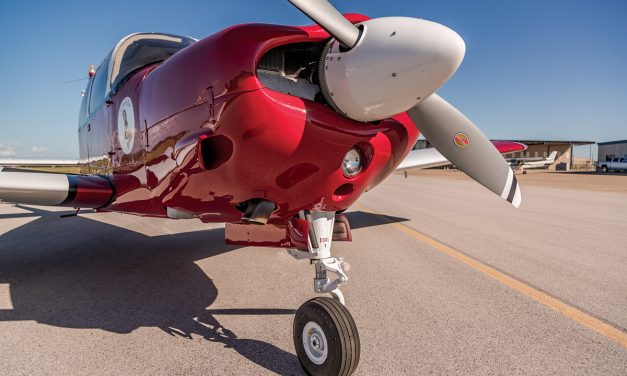
The factory nose bowl has a piano hinge that keeps the right and left side of the nose bowl together with pins. Over the years the hinges wear out and you get a lot of movement in the nose bowl. You can actually push in the nose bowl a couple of inches with your fingers. When the configuration of the nose bowl changes in flight, you lose speed. Dave Pratt’s nose bowl splits from top to bottom so nothing changes in flight. One of the largest improvements in speed came when I installed a ram air system. I designed, built and installed a ram air system for my Comanche 400 and got it field approved. With the ram air open, I pick up another 1.5 to two inches of manifold pressure, depending on altitude. When you open the ram air in flight, it’s like kicking in the two back barrels of a four-barrel carburetor. It really pushes you back in the seat. Next was engine and fuel management. I flew to Ada, Okla., home of GAMI injectors, to get a real lesson in engine management. What an eye-opening experience that was. After “mapping” my fuel burns and EGTs, I found out that the hottest cylinder indicated on my EGT scanner was not the cylinder that peaked first. That explanation is too deep to go into in this article. If you want to know more, you can contact GAMI or me. The GAMI injectors balanced all eight cylinders so that all cylinders peak at once. The engine makes more power when all eight cylinders are in the power range, not just three or four cylinders. What does all this mean in terms of speed? I cruise at 246 to 250 mph true airspeed on 24 gph depending on fuel load and gross weight. Race speeds are higher, too. In April 1999, I ran a National Aeronautics Association speed record from Gulfport, Miss., to Lakeland, Fla., at 271 mph. In 1999 we were one of the top air race teams in the U.S. The Comanche 400 is a fast, strong airplane. When I want to race, it’s a winner. When I want to fly cross-country to see grandma, there is no other machine like it for speed, comfort and price. What’s the next project you ask? I’m working on supercharging my Comanche 400 and conquering some NAA speed records that have been in the books for more then 30 years. I plan to run these records at 25,000 feet. The project is in motion. By the time you read this article, I will have the first test results. Projected speeds are in the mid 300s. There are obstacles to overcome, but I won’t quit until I have the power, again. Charles Horton is an instrument-rated private pilot who has logged more than 2,500 hours since 1984, with over 2000 hours in the Comanche 400. Since 1995 he has won or placed in numerous cross-country air races and holds several NAA speed records. Charles and his wife, Melody, live on an airport community in Diamondhead, Miss. You can contact him at This e-mail address is being protected from spambots. You need JavaScript enabled to view it . |


The engine produces 75 percent power all the way up to 8,000 feet and has a book speed of 185 knots (213 mph) at that altitude. That’s moving for a normally aspirated engine.
I then had the flap and aileron gap seals installed. I didn’t get any extra speed but my low speed handling was greatly improved. The gap seals come in handy on those turbulent IFR approaches. The airplane is real snappy to recover.